Unsupervised AI models for Down syndrome neuroimaging research: from automatic brain alteration detection to the generation of synthetic 3D magnetic resonance images
- Name: Unsupervised AI models for Down syndrome neuroimaging research: from automatic brain alteration detection to the generation of synthetic 3D magnetic resonance images
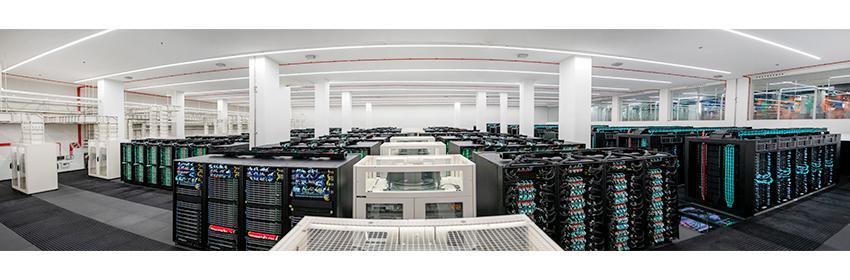
- EuroHPC machine used: MareNostrum 5
- Topic: Computer and Information Sciences
Overview of the project
This project set out to use structural brain magnetic resonance imaging (MRI) to understand Down syndrome (DS) neuroanatomy and its links to cognition and Alzheimer’s disease, overcoming the burden of expert manual analysis with unsupervised AI models. It delivered an end‑to‑end 3D pipeline where variational autoencoders learned normative anatomy from healthy euploid scans and produced detailed voxel‑wise anomaly maps highlighting DS‑related structural deviations. The learned latent representations enabled subject discrimination and patient stratification (including DS vs euploid and exploratory staging of disability/AD progression), with strong generalisation reported for DS vs controls. At the same time, latent diffusion models—run in compressed latent spaces—generated realistic synthetic 3D MRIs that preserve DS‑relevant morphology for privacy‑preserving augmentation and data sharing. EuroHPC supercomputing on MareNostrum 5 ACC nodes enabled direct full‑volume 3D training at scale, turning exploratory neuroimaging into a foundation for more precise DS neurodegeneration biomarkers.
How did EPICURE support the project and what were the benefits of the support?
With support from the EPICURE team, the project implemented data-distributed parallelism strategies, scaling VAE training efficiently from one to eight nodes while maintaining numerical stability. This parallelization significantly shortened training time, enabled extensive hyperparameter searches and ablation analyses, and allowed the use of higher-resolution inputs and larger batch sizes—improving reconstruction accuracy and the generative models’ realism.
Additional references
Malé, J., Fortea, J., Rozalem-Aranha, M., Martínez-Abadías, N., Sevillano, X., for the Alzheimer’s Biomarker Consortium on Down Syndrome study. (2026). Generative Latent Representations of 3D Brain MRI for Multi-Task Downstream Analysis in Down Syndrome. https://arxiv.org/abs/2602.13731
Malé, J., Fortea, J., Rozalem-Aranha, M., Martínez-Abadías, N., Sevillano, X., for the Alzheimer’s Biomarker Consortium on Down Syndrome study. (2026). Exploiting Generative Models for Downstream Classification Tasks on Latent Spaces Using 3D Brain MRI Scans: A Down Syndrome Case Study. In: Gonçalves, N., Oliveira, H.P., Sánchez, J.A. (eds) Pattern Recognition and Image Analysis. IbPRIA 2025. Lecture Notes in Computer Science, vol 15938. Springer, Cham. https://doi.org/10.1007/978-3-031-99568-2_11
Contact the project:
- Xavier Sevillano (xavier.sevillano@salle.url.edu)