Investigation of novel epigenetic signals through combinatorial crosstalk between histone isoforms
- Name: Investigation of novel epigenetic signals through combinatorial crosstalk between histone isoforms
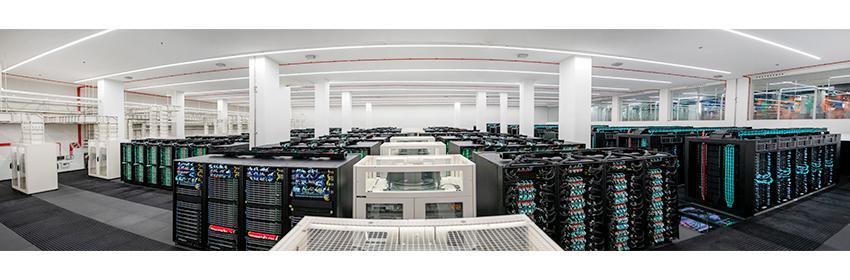
- EuroHPC machine used: MareNostrum 5
- Topic: Natural sciences (Computer and information sciences, biological and chemical sciences)
Overview of the project
The nucleosome, a disc-shaped molecule composed of around 147 bp of DNA surrounding a proteinous core, is the smallest architectural unit of chromatin and a critical regulatory hub of gene expression. Despite being thought of as a stable and symmetrical unit, research shows that post-translational changes and the insertion of histone isoforms (histones being the protein components of nucleosome) cause nucleosomes to exhibit significant structural diversity. The most diverse isoforms are found in histones H2A and H2B, the evolutionarily youngest histones. With the capacity to assemble separately, different isoforms of H2A and H2B can engage selectively with various chromatin factors. These typically occur through DNA unwinding which is related to the stability of different nucleosomes.
In this project we examined the effects of various combinations of H2A–H2B isoform pairs and how they interact with another histone, histone H3, and its centromere-specific isoform CENP-A. Using atomistic molecular dynamics simulations and regression algorithms trained on experimental data we predicted the stabilities of various nucleosome compositions. We found nucleosome compositions across a broad spectrum of stabilies that could be linked to physiological motivations yet to be unlocked by experiment.
How did EPICURE support the project and what were the benefits of the support?
“For various technical issues related to our project, including software installation, benchmarking, and performance optimization, we reached out the EPICURE team for assistance. EPICURE helped us by establishing the necessary software environment, ensuring tool compatibility, and fixing installation problems that we were unable to handle on our own. Additionally, they assisted us in testing the speed of our workflows and identified the stages that were causing difficulties. With their help, we were able to increase the speed and accuracy of our atomistic molecular dynamics simulations.
By quickly fixing installation problems and assisting us in optimizing our operations, EPICURE’s support helped us save a significant amount of time. Their improvements decreased extra processing, reduced total energy use, and improved the performance of our simulations.” – Seyit Kale, Research Group Leader
Contact the project:
- Hatice Döşeme (hatice.doseme@ibg.edu.tr)